
Net zero buildings, high-performance HVAC systems, and custom-designed physical plants can be remarkable achievements. At their best, they make schools healthier, more comfortable, and more sustainable places to learn. This is certainly the idea when district leadership signs off on a new system, but even the most elegant system can become a slow-burn liability if it cannot be maintained by the people and resources available in the community it serves.
In many districts, especially rural or under-resourced ones, aging custom systems eventually depend on a shrinking pool of specialized technicians and hard-to-find parts. When someone with institutional knowledge retires or the original equipment and parts are no longer supported by the manufacturer, schools can be left choosing between patching an obsolete system together or paying millions to replace it.
This is the long tail of HVAC design decisions. System selection is often driven by the promise of performance under current assumptions and ideal conditions. But one factor is consistently underestimated, and that is who will operate and maintain these systems over the next 20 to 30 years, and under what constraints.
Common Failure Modes in Aging School HVAC Systems
Hydronic HVAC systems are the most common systems we find in the field. These systems are especially popular in schools and other mid- to large-size public buildings because water is a very efficient heat transfer medium. Energy-efficient, next-gen hydronics are on the horizon, but the majority of the units we see were installed between the 1960s and 1980s thanks to the post-war school construction boom, the energy crises of the 70s and 80s, and the simple fact that central plants and piped distribution systems were the design norm in schools, hospitals, and other campus-style buildings.
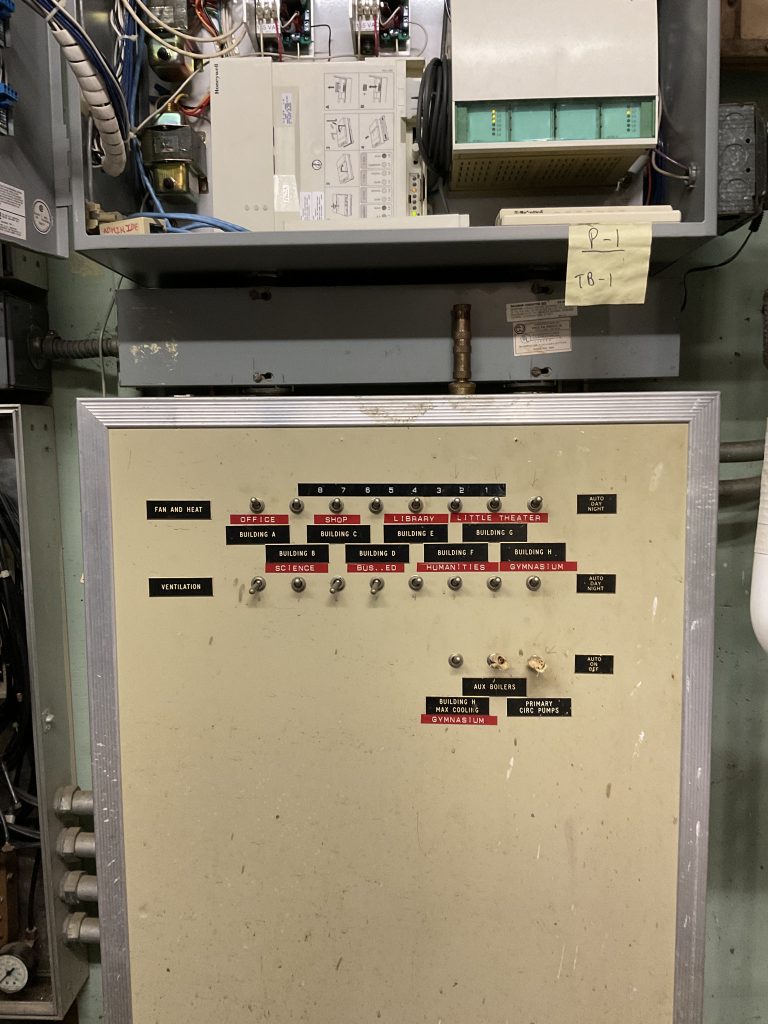
However, their design assumed a level of ongoing care that many districts simply don’t have access to now. Skipped water treatment leads to internal corrosion and patch repairs instead of system-level fixes compound the problem. In neglected hydronic systems, expansion tanks fail and pressure spikes. Air gets into the system, accelerating corrosion, and pumps cycle improperly, putting stress on fittings. Hydronic systems are highly maintainable, but only if maintained consistently. Without that, they age very badly.
The video below shows a hydronic pipe leak above the ceiling. In older hydronic systems, hot or chilled water is circulated through pipes to terminal units (fan coils, unit ventilators, etc.). Over time, the pipes corrode, especially if the proper water chemistry wasn’t maintained. The joints can fail because threaded or soldered connections degrade, and vibration and thermal expansion cause stress fractures. The result can be incredibly damaging and disruptive in classrooms, where vulnerable young children spend hours a day.
When this happens, there’s also the possibility that a coil could be leaking, a control valve could be stuck open or cracked, and/or a condensate pan could have rusted through. In these cases, the grille isn’t the source, it’s just where the water is escaping and the real fun begins when looking for the source.
Failures like these above aren’t just a nuisance. Wet, heavy ceilings bring the risk of collapse, shock and fire hazard, and slip hazards. Mold can start growing on wet materials within 24-48 hours, causing indoor air quality health hazards. Finally, breakdowns at this level are rarely isolated; rather, they often indicate systemwide degradation.
Rethinking School HVAC Systems from First Cost to Lifecycle Reality
Facilities teams are small, budgets are tight, and staff are often responsible for multiple buildings and systems. When equipment fails, the immediate task at hand is to figure out what broke, but then they face additional challenges. If they can’t handle it within their team or other district resources, there may not be a qualified technician available to fix it. Even if they have the know-how and manpower, they may need parts that aren’t manufactured anymore, and in extreme cases, not even identifiable. The worst case scenario? The break is on a legacy system no one knows how to fix because anyone knowledgeable on it aged out of the workforce.
These are the questions that districts rarely ask at selection but define the next 30 years of operation. Designing for the long haul means thinking beyond system performance in year one and asking harder questions during selection. These include considering whether the system will be serviceable with the facilities team and workforce on hand, as opposed to specialized contractors. Decision-makers must also consider whether the parts used by the system are standardized or whether they may become scarce over time, whether components can be replaced incrementally or require a full overhaul, and how dependent the system is on integrated controls and who will support those systems long term.
Just as importantly, design teams should consider the operational reality of the communities they serve. A system that performs well on paper but requires constant specialized intervention may not be viable in a district with limited staff and resources.
The cheapest or most efficient HVAC option right now might not be over the lifetime of the system. Designers, architects, and construction teams are not just building for commissioning, they’re also making decisions that will shape how a system performs, degrades, and is maintained over decades. It’s not enough to ask whether the system will work. You must ask if it will still work in 30 years.
 All News